Advanced Data Analysis and Prediction
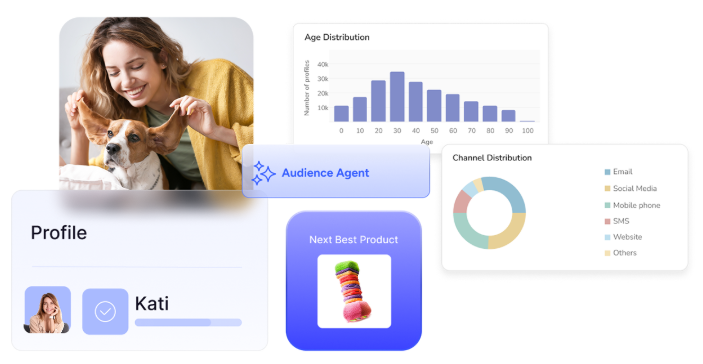
By analyzing unified data, you can increase customer resolution and build machine learning models to predict future customer behavior and purchase probability.

As customer touchpoints with businesses have diversified to include websites, apps, physical stores, ads, and social media, customer data has become increasingly complex. However, because this data is often managed separately in different departments and tools—a problem known as "data silos"—it has become extremely difficult to get a complete picture of any single customer. Customers expect a consistent experience, yet companies can only see fragmented data, leading to disjointed and ineffective customer approaches. The Customer Data Platform (CDP) is gaining attention as the key to solving this critical business challenge.





A CDP (Customer Data Platform) is a "data foundation" for collecting and unifying all of a company's customer data. Its primary purpose is to consolidate fragmented information to enable a deep understanding of the customer.
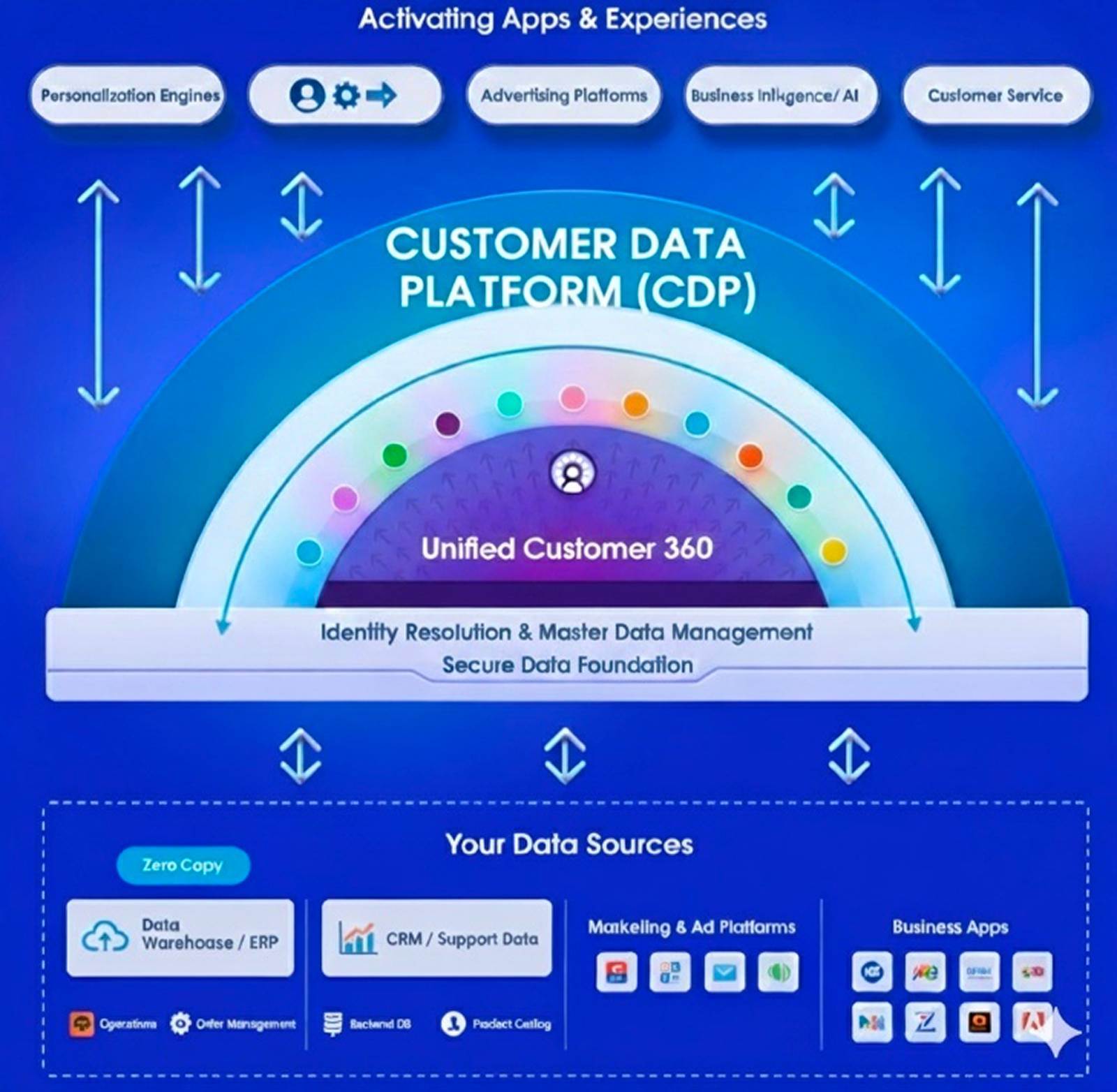
It links and unifies scattered data from both online and offline sources—such as website behavior, app usage, and in-store purchases—to each individual customer. This process breaks down departmental "silos" and builds a consistent, unified customer profile.
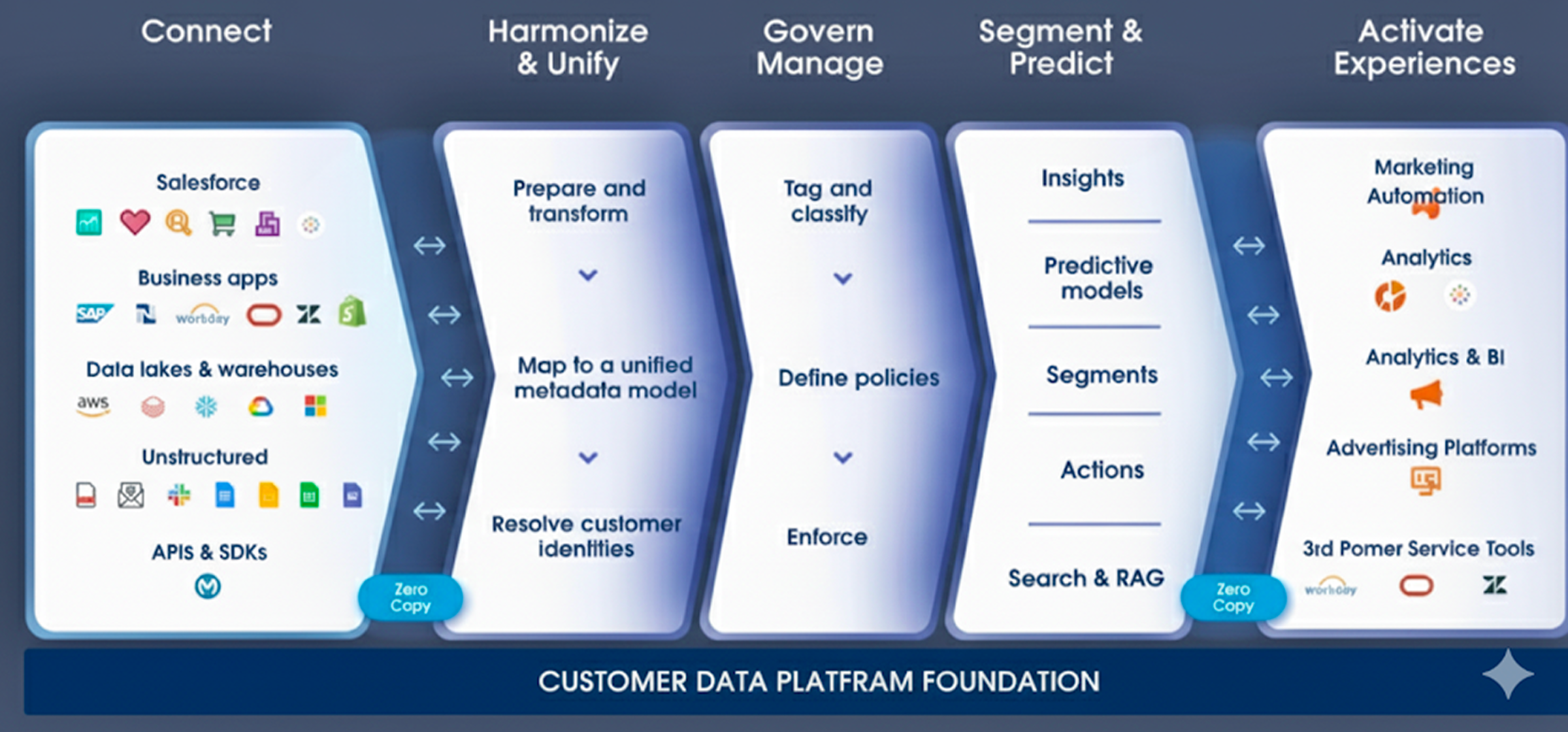
It transforms unified data into a strategic foundation for business growth. This organized customer data can be activated and connected to various marketing systems, such as MA, advertising, and BI tools. This enables data-driven personalization and the execution of effective communication strategies, improving the precision of all business activities.
CDP is the engine for a modern data strategy, enabling a continuous cycle of marketing improvement as illustrated in the diagrams below. This process begins by collecting and unifying scattered data to build a complete customer view (the technical flow). This unified profile is then used to analyze, segment, and ultimately activate personalized experiences across various channels, allowing businesses to constantly measure results, optimize their strategies, and deepen customer engagement (the strategic cycle)